All Categories
Featured
Table of Contents
Working with a marketing team abroad used to be a simple cost choice. Nearshore and overseas models have diverged substantially in how they perform, what they cost, and what kind of work they manage well.
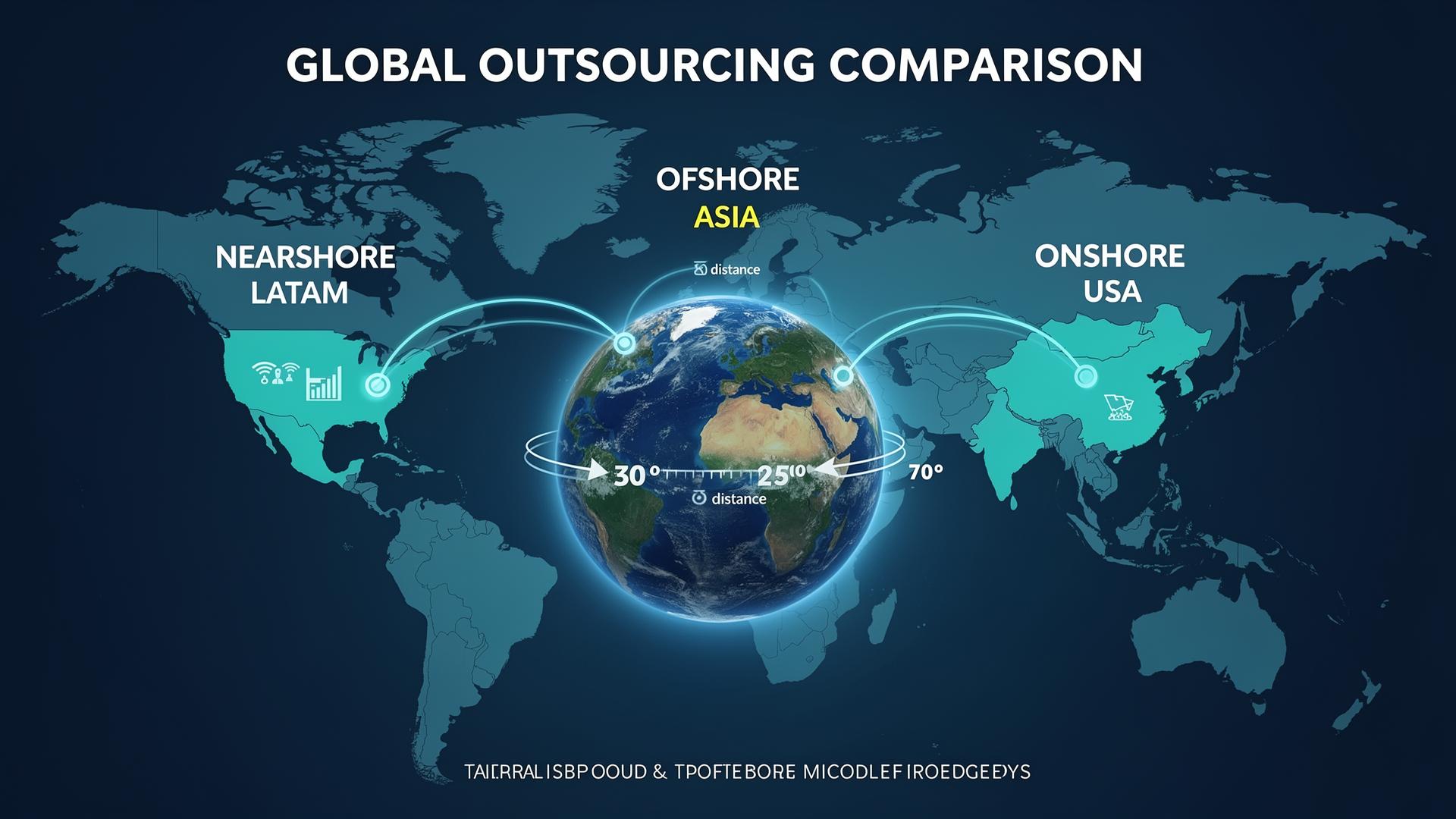
For U.S. companies, that generally implies LATAM. Work takes place in real time, partnership is concurrent, and cultural alignment tends to be stronger. Offshore marketing suggests hiring throughout a significant time distinction, frequently eight or more hours. Work is typically asynchronous, execution-focused, and structured around handoffs instead of live cooperation. The difference matters because it changes how you inform, evaluate, and repeat on marketing work day to day.
Building Resilient Governance Systems for Global Capability HubsShared hours make everyday standups, imaginative evaluations, and quick QA practical. Brand name guardianship improves when feedback cycles run in hours, not days. LATAM nearshore skill uses English efficiency, strong cultural positioning with U.S. markets, and protection across SEO, material, paid media, and brand name strategy, making it a natural suitable for U.S
Analyzing Nearshore and Hybrid Frameworks in 2026
An offshore marketing team provides depth and efficiency at scale. You can put together specialized talent across marketing ops, analytics, SEO, and lifecycle automation at a lower combined rate. The distance presents scheduling friction, so success depends upon clear briefs, documented workflows, and strong tracking. Done right, offshore handles production while nearshore leads method and version.
marketsVaries significantlyCost vs. U.S. hire40-60% lower60-75% lowerBest forBrand, technique, iterationScale, production, volume Nearshore teams work your hours, which accelerates approvals, imaginative pivots, and live performance triage. Offshore teams execute well however depend on planned syncs and documents. Numerous online marketers pair nearshore for collaboration-heavy deal with overseas for over night production sprints.
Evaluating Offshore and Global Models for 2026
Offshore teams bring fresh point of views and scale however require more in advance brand onboarding. In either case, playbooks and tone guidelines close most gaps. Offshore rates are normally lower, which extends budgets for multi-channel programs. Nearshore expenses more however the overlap lowers rework and speeds approvals, balancing out invest in fast-moving environments. For numerous U.S.
Pick nearshore when your marketing moves quickly and you need individuals who can get on a call, turn around a modification, and decide the exact same day. If you are running test-and-learn projects, launching into new markets, or building brand in genuine time, nearshore is the right call. Choose offshore when your procedures are recorded, your briefs are tight, and you require volume at the most affordable possible cost.
Which projects need same-day innovative pivots and which can work on a two-day feedback cycle? How mature are our briefs, QA checklists, and reporting? Which roles write or speak in your brand voice straight, and which work behind the scenes on information and tooling? What budget plan and employing versatility do we require over the next 2 quarters? Scale Army sources, veterinarians, and locations junior-to-senior talent aligned to U.S.
Most customers see prospects within a week and make a hire within 2 week, at 40 to 70 percent below U.S. employing expenses. Month-to-month contracts, no positioning charges, and a 90-day success warranty on every positioning.
Navigating International Workforce Market Dynamics for 2026
Advantages and disadvantages of nearshore outsourcing Why nearshore works Real-time collaboration is the default, not a workaround Most software application work in 2026 is built around multidisciplinary Agile groups working on collaboration, version, and brief feedback loops. Shared workday hours are not a nice-to-have for this design of work, they're the underlying condition that makes it work at all.
The talent swimming pool keeps growing Latin America's engineering skill swimming pool has grown materially faster than the equivalent onshore market over the last 5 years. Costa Rica, Colombia, Argentina, Mexico, Brazil, and Chile have actually all built deep benches of senior engineers, and the supply continues to exceed U.S. growth in the exact same skill classifications.
Methodology fit is structural This is the 2026 addition. AI-native methodology requires quick Plan/Confirm cycles, which need real-time partnership, which requires shared organization hours. Nearshore has those conditions built-in. The approach layer doesn't have to combat the location; it compounds it. A traditional 812 person nearshore group running GenDD becomes a 3-person Pod delivering the very same work.
Travel is really workable A flight from Atlanta to San Jos, Costa Rica is much shorter than a flight to San Jose, California. Same-day big salami are practical from the majority of U.S. hub airports. This matters less than it utilized to in a post-pandemic world, however when in-person work is needed, the friction is low.
Some offshore engagements provide genuine expense savings if the workload endures async-first partnership. The truthful comparison consists of the coordination tax and quality difference that feature the overseas rate, but the rate is genuine. Language and culture are close, not identical English efficiency is strong across senior LATAM talent, but it is a 2nd language.

Latest Posts
Leveraging Business Process Optimization for Maximum ROI
Navigating International Labor Laws for GCC Growth
Detailed Analysis On Global Talent Hub Evolution